Defining Moments Of Rev. Jesse Jackson's Career
Rev. Jesse Jackson’s Monumental Milestones: How The Freedom-Fighting Faith Leader Reminded The World That ‘They Are Somebody’ - Page 2
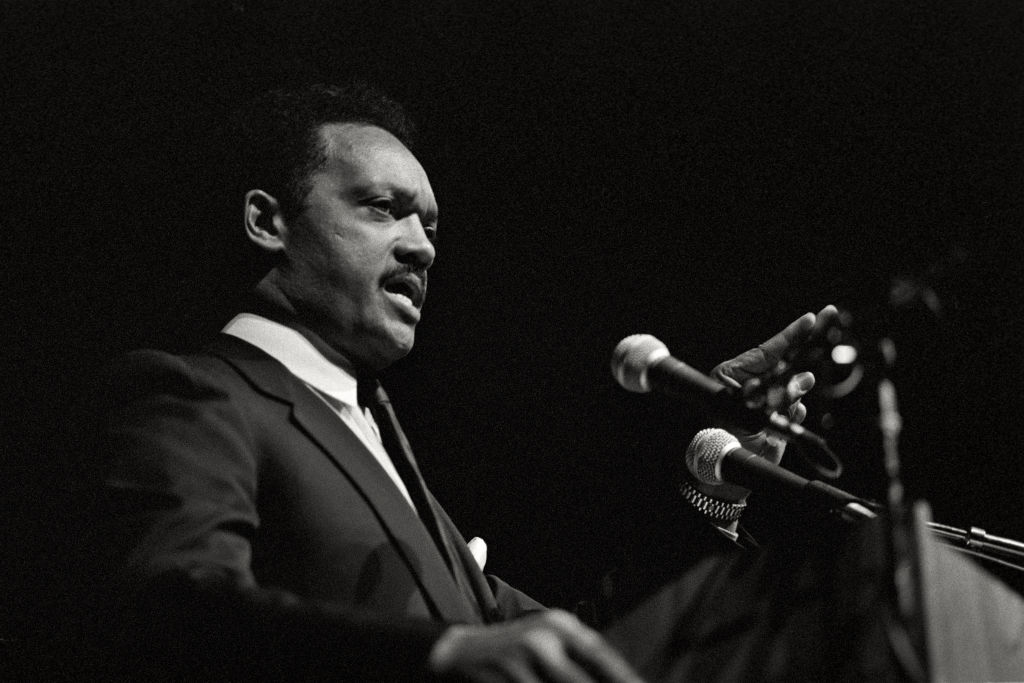
No American leader has shaped the modern civil rights landscape quite like Reverend Jesse Jackson, widely known as “The Great Unifier.”
As previously reported, the family of the icon who expanded the reach of the Civil Rights Movement, founded the Rainbow PUSH Coalition, and broke barriers with two presidential bids, confirmed that he died Tuesday at 84.
But before his death, he continued to remind the masses that they are somebody.
With more than six decades of political involvement, the civil rights icon, two-time presidential candidate, and founder and president of the Rainbow PUSH Coalition used his passion for justice to become one of the nation’s most influential civil rights, religious, and political figures. For more than sixty years, he was at the forefront of movements for empowerment, peace, gender equality, and economic and social justice, whether standing on the front lines with protestors or advancing those causes through his presidential campaigns or community initiatives.
On Aug. 9, 2000, President Bill Clinton awarded Reverend Jackson the Presidential Medal of Freedom, the nation’s highest civilian honor. Often called the “Conscience of the Nation,” Jackson has consistently challenged America to embrace inclusion and uphold fairness and humanity, whether through Operation Breadbasket or the major voting rights initiatives he championed during his presidential campaigns. Throughout his remarkable career, the South Carolina native has leveraged his keen intellect and deep community spirit to unite people across diverse lines of race, culture, class, gender, and faith.
Let’s take a look back at the defining moments of Reverend Jesse Jackson’s incredible career after the flip.
CORE
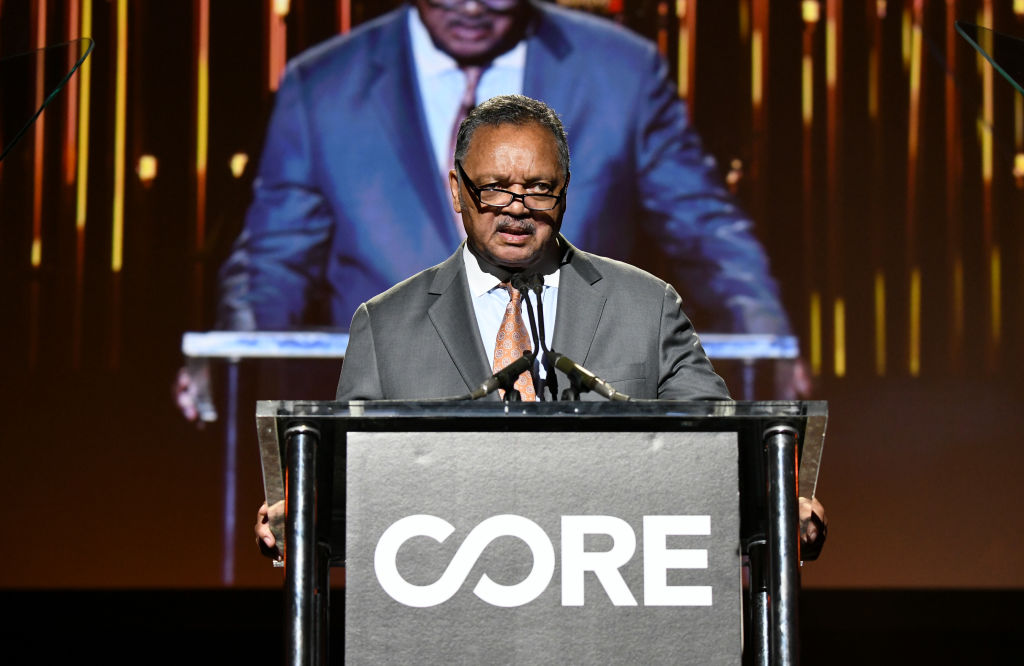
While attending North Carolina A&T in Greensboro, South Carolina, Jackson became deeply involved in the Civil Rights Movement by joining the Greensboro chapter of the Congress of Racial Equality (CORE), according to the History Makers and the Rainbow PUSH Coalition website. His activism began early: in the summer of 1960, he took part in the effort to desegregate Greenville’s public library, an experience that marked the start of his leadership in the sit-in movement. By 1963, he was helping organize actions that resulted in the desegregation of local restaurants and theaters in Greensboro.
Jackson rose quickly within the movement, serving as field director for CORE’s southeastern region and leading the North Carolina Intercollegiate Council on Human Rights. In 1964, he represented students nationwide as a delegate at the Young Democrats National Convention. That same year, he graduated from North Carolina A&T with a degree in sociology and later received a Rockefeller grant to pursue graduate studies at the Chicago Theological Seminary.
SCLC
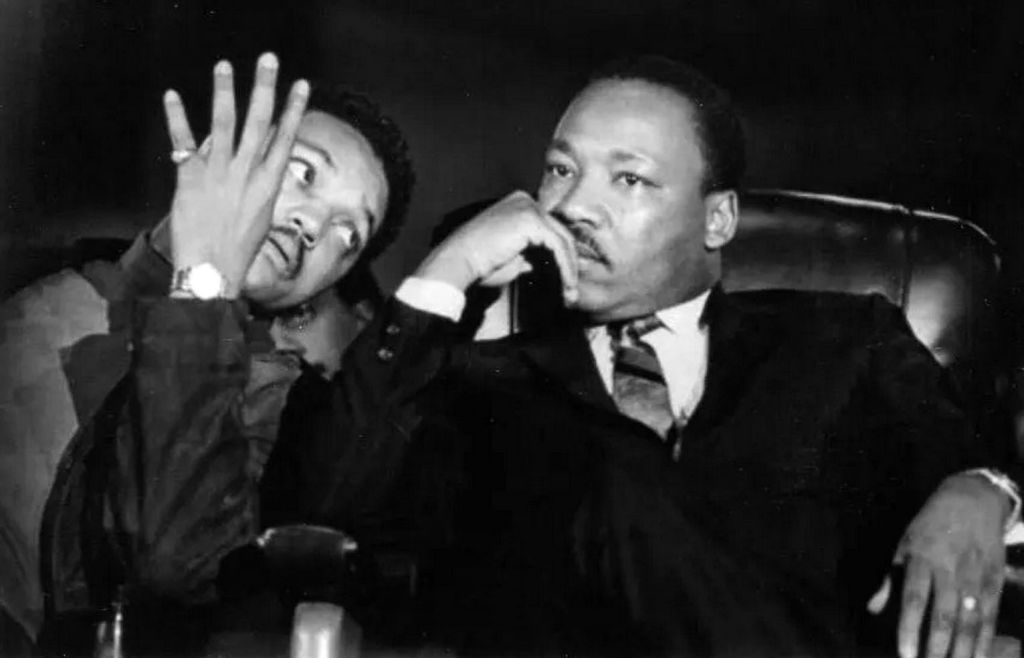
Jackson put his Master’s of Divinity degree on hold to follow his passion for activism. In 1965, Jackson left seminary to join Dr. Martin Luther King Jr. and the Southern Christian Leadership Conference (SCLC) during the historic Selma marches in Alabama. According to Stanford University, in March 1965, he led a group of fellow students to Selma, Alabama, responding to Dr. King’s call for supporters of the local voting rights campaign. A year later, in 1966, Dr. King appointed Jackson to lead the Chicago branch of SCLC’s economic initiative, Operation Breadbasket, a program designed to strengthen African American-owned businesses and expand job opportunities within Black communities.
Per the Chicago Public Library, confronted with the city’s persistently high unemployment rate among African Americans, Jackson and teams of ministers set out to evaluate the hiring practices of local companies. Firms that employed few or none of the city’s qualified Black workers were urged to implement fair hiring practices and goals within the coming months. The objective was straightforward: ensure that the workforce genuinely reflected the racial makeup of the community it served.
Operation Breadbasket prioritized dialogue and negotiation with business leaders. Yet when companies refused to cooperate or fell short on their commitments, the participating ministers turned to their congregations for support. From their pulpits, they challenged worshippers to consider the ethics of spending money at businesses that profited from the Black community while denying its residents access to jobs. Their appeals sparked a series of “Don’t Buy” campaigns—short for “Don’t Buy Where You Can’t Work”—which included organized picketing outside major supermarkets and other retail establishments.
“Keep a slice of the ‘bread’ in your community” became the movement’s official slogan, hammering down Operation Breadbasket’s mission: economic justice through fair employment and community empowerment.
Two years after the successful launch of the initiative, Jackson was ordained on June 30, 1968, by Rev. Clay Evans.
The Rise of Operation PUSH and the Rainbow Coalition
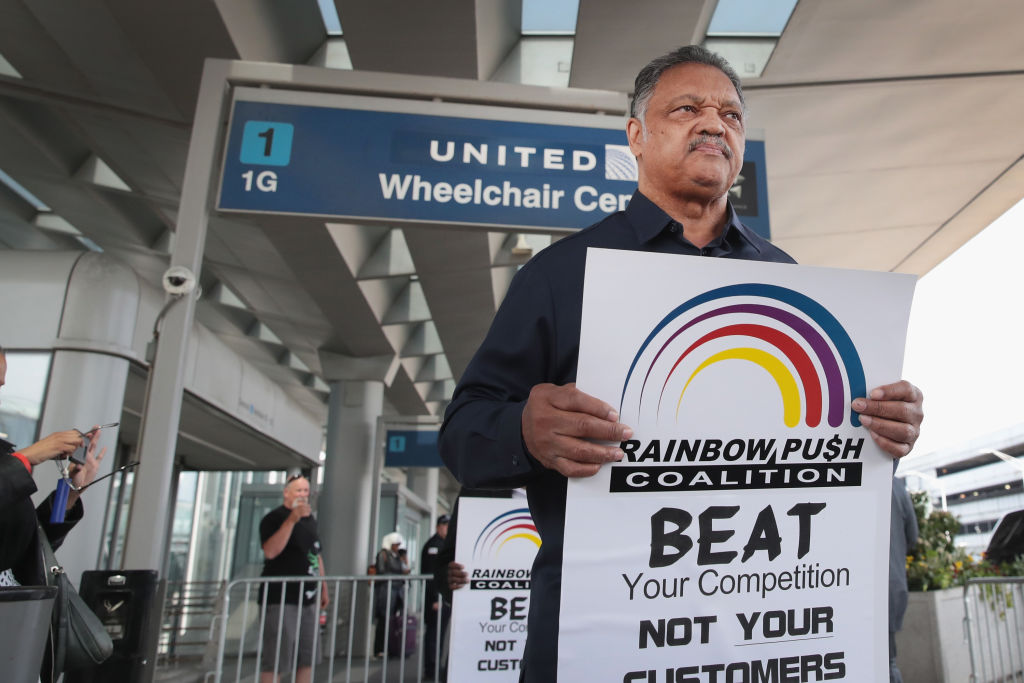
In December 1971, Reverend Jackson founded Operation PUSH (People United to Serve Humanity) in Chicago. Its mission focused on economic empowerment and expanding opportunities for marginalized communities. In 1984, he established the National Rainbow Coalition, a Washington, D.C.–based organization dedicated to political empowerment, educational equity, and public policy reform. When the two merged in 1996, the Rainbow PUSH Coalition was born—an organization that continues to champion many of America’s most pressing social justice issues.
Decades before movements for national healthcare, anti-apartheid sanctions, drug policy reform, Middle East peace negotiations, and Haitian democracy became mainstream, Jackson was pushing these causes into public consciousness.
Presidential Campaigns and “Keep Hope Alive”
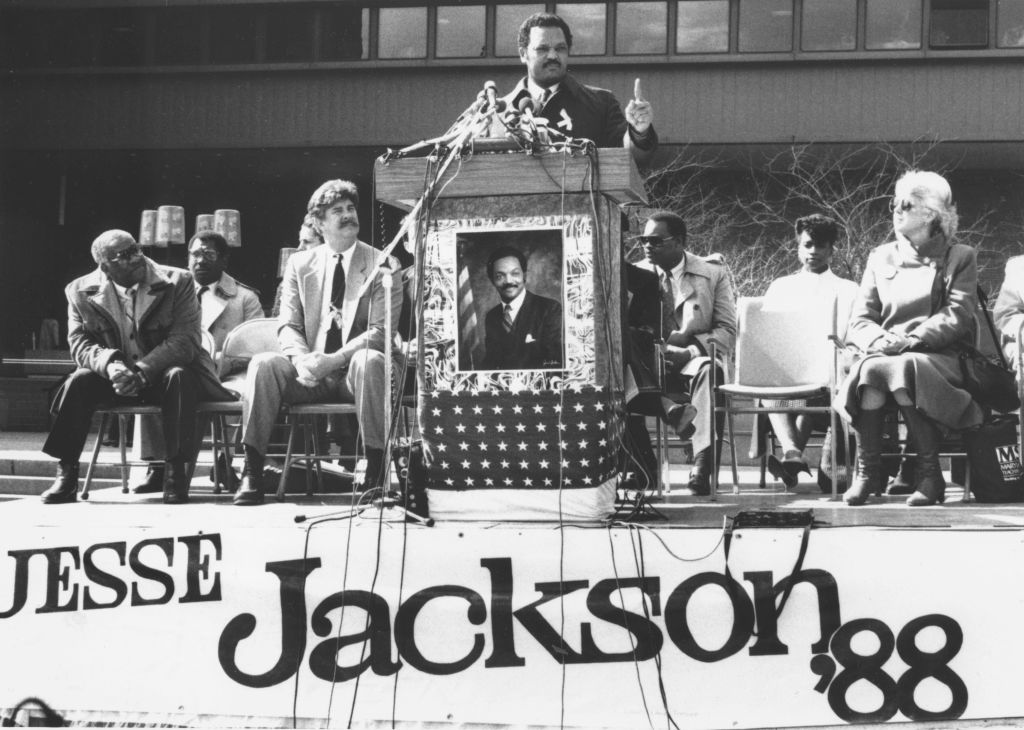
Jesse Jackson ran groundbreaking presidential campaigns in 1984 and 1988, seeking a chance to bring his inclusive policies to the White House. The Rainbow PUSH Coalition united African Americans, Latinos, Native Americans, poor white voters, women, labor groups, and LGBTQ communities in one of the most diverse alliances ever assembled in American politics.
Ahead of his time, Jackson campaigned on raising the minimum wage, universal healthcare, increased investment in education and job training, reducing military spending, and strengthening civil rights protections.
His efforts also helped register millions of new voters and energized progressive politics across the nation. According to the Rainbow PUSH Coalition, Jackson’s 1984 campaign registered over one million new voters and won 3.5 million votes. In 1988, he registered over two million new voters, earned 7 million votes, and achieved top-two finishes in 46 of 54 primaries—an unprecedented milestone for a Black presidential candidate at the time.
His speeches also played a defining role in shaping his legacy. Jackson infused them with moral clarity, biblical cadence, and a sense of political urgency. His address at the 1988 Democratic National Convention—delivered during his second presidential run—remains one of his most memorable, notable for the rallying cries “Keep hope alive” and “common ground.” Jackson urged Americans to come together—Black and white, rich and poor, urban and rural—to build a more just and inclusive country, stressing that as a nation, our work is best done when everyone is lifted, not divided.
Reflecting in a 2020 interview with WTTW, Jackson spoke about the grassroots nature of his campaigns.
“We were campaigning, we were crusading, staying in people’s homes.” He explained that staying with families across the country shaped his understanding of their struggles.
“That’s how I got a sense of the country. And so when I spoke about the coal miners, I [had] stayed in their homes. I didn’t stay in hotels; we couldn’t afford it.”
During the 1984 campaign, he successfully pushed for changes to delegate allocation rules during a party’s national convention, a shift he famously described in his own words:
“We democratized democracy… We changed it into proportionality.”
Presidential Medal of Freedom
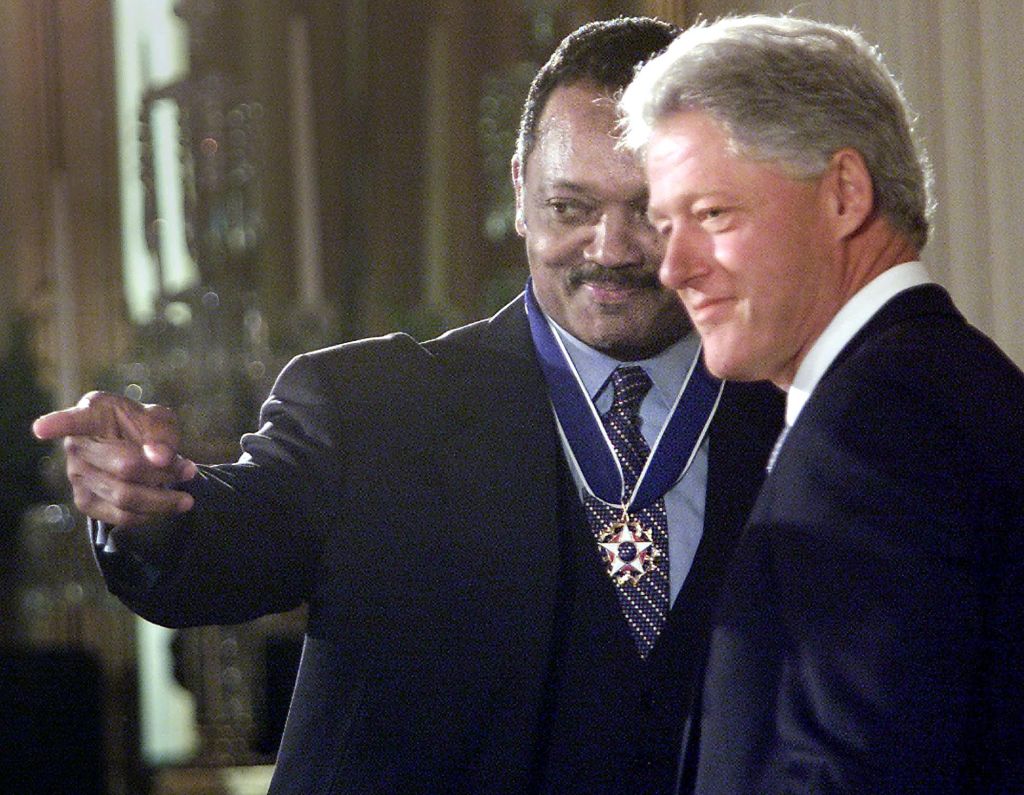
Although Reverend Jackson never became president, his impact on American society was recognized at the highest level. In 2000, President Bill Clinton awarded him the Presidential Medal of Freedom for his lifetime of leadership in civil rights, diplomacy, and social justice. From marching with Martin Luther King Jr. to founding Operation PUSH and the National Rainbow Coalition, Jackson’s legacy has transformed both national policy and global human rights.
After decades of activism, he finally received his Master of Divinity degree from Chicago Theological Seminary that same year, proving that it’s never too late to go after your dreams.
Rev. Jesse Jackson’s Monumental Milestones: How The Freedom-Fighting Faith Leader Reminded The World That ‘They Are Somebody’ - Page 2 was originally published on bossip.com