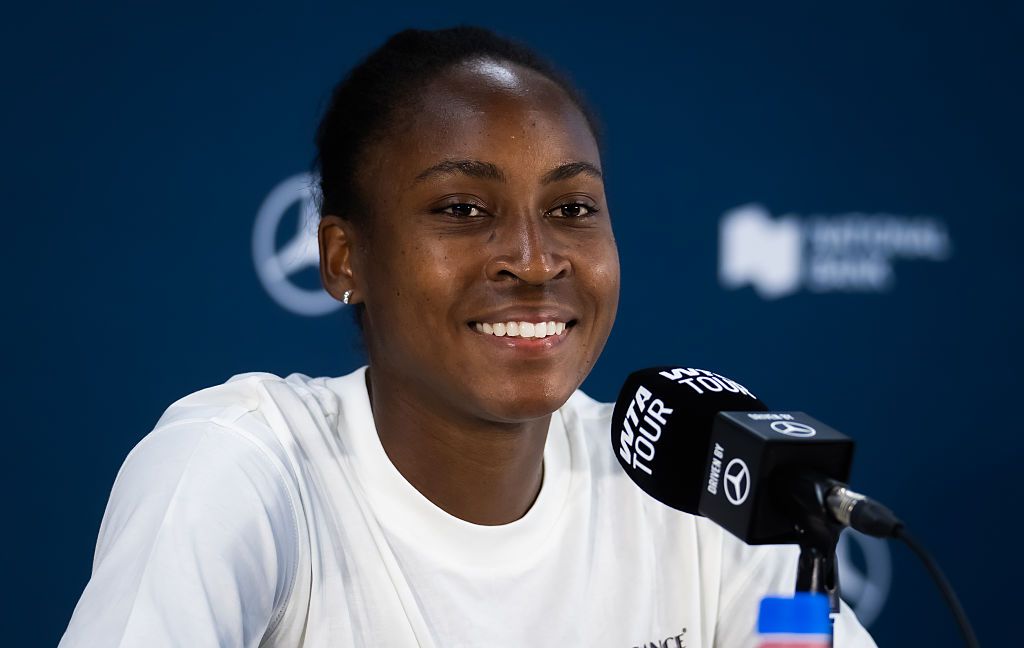
The debate surrounding transgender athletes in women’s sports has never completely disappeared, but it has found its way back into the center of the sports conversation this summer. From the WNBA to professional tennis, athletes and coaches are being asked where they stand on the balance between inclusion and maintaining competitive protections in women’s sports. Coco Gauff became one of the latest stars to weigh in this week, offering a considerably more nuanced response than some of the voices that have dominated the conversation.
But much of the latest conversation can be traced to Indiana Fever guard Sophie Cunningham. In a July ESPN profile, Cunningham said she wanted to “protect young girls” in locker rooms and competition and argued that they shouldn’t have to compete against what she called “biological men.” When asked about the comments again days later, Cunningham didn’t back away, calling her position “common sense” while insisting that disagreement with transgender participation in women’s sports does not mean she hates transgender people. The comments became big enough that demonstrations supporting and opposing Cunningham began appearing outside Fever games.
Minnesota Lynx coach Cheryl Reeve, however, has emerged as one of the strongest voices pushing back. Ahead of Minnesota’s Aug. 2 game against Indiana, Reeve said transgender children deserve access to sports and described the larger issue as one of human rights. She also acknowledged that questions surrounding elite athletics after puberty are more complicated, but rejected the idea that exclusion should be the starting point. Reeve later wore a “Trans Kids Belong” shirt during the Fever-Lynx game, making her stance impossible to miss.
Reeve had actually addressed Cunningham’s argument even before that. She called the increasingly aggressive rhetoric surrounding transgender people “sickening” and argued that framing transgender women as dangers inside women’s locker rooms perpetuates harmful stereotypes. Las Vegas Aces forward Brianna Turner, who has publicly advocated for the transgender community throughout her WNBA career, amplified Reeve’s comments and said many arguments surrounding trans people are driven by “fearmongering and bigotry.” That makes the disagreement especially notable because it isn’t happening somewhere outside women’s sports — some of the strongest responses are coming from people actively competing and coaching in the WNBA.
Megan Rapinoe has also jumped directly into this latest conversation. During a July appearance on The View, the retired USWNT star argued that transgender participation in sports is being used as a political “wedge issue.” Rapinoe questioned the idea that transgender athletes inherently make girls unsafe and warned that increasingly invasive attempts to verify who qualifies for women’s competition could ultimately affect cisgender women and girls as well. Her position puts her firmly opposite Cunningham, and Rapinoe has since criticized Cunningham’s decision to pose for a photo with former NCAA swimmer and activist Riley Gaines at the Fever-Lynx game.
That brings the conversation to Coco Gauff, whose comments this week offered something different from either side’s more absolute arguments. With the WTA introducing a one-time genetic test as part of its eligibility requirements, Gauff said she understands the importance of fairness in women’s competition. At the same time, she warned against allowing those policies to become another way to target transgender people, saying the subject requires a “nuanced answer.” Gauff made clear that she supports the trans community while also believing sports organizations have a responsibility to preserve fair competition — essentially refusing the idea that she must abandon one concern to acknowledge the other.
Even Caitlin Clark has now been pulled into the discussion because of everything happening around her Fever teammate. Asked about Cunningham’s comments and whether she feels pressure to address controversial subjects, Clark said she speaks when she feels genuinely compelled to do so and that the transgender-athlete debate isn’t something the Fever regularly discusses inside their locker room. Rather than staking out a detailed position, Clark essentially left eligibility decisions to leagues and governing bodies and said her primary focus remains basketball. It’s another example of just how difficult the subject has become for athletes: even choosing not to become one of its public faces can become part of the story.
And the disagreement extends beyond the WNBA’s current generation. Tennis legend Martina Navratilova remains firmly opposed to transgender women competing in women’s categories and as recently as June challenged longtime friend Billie Jean King over King’s support for transgender inclusion. Older comments from Charles Barkley and former NBA player Enes Kanter Freedom have expressed similar opposition to transgender women competing in women’s sports, but their comments are better viewed as part of the larger history of the debate rather than the driving force behind this latest chapter.
What’s becoming increasingly clear is that there isn’t one unified position among women athletes — or even among people who broadly agree on protecting women’s sports. Cunningham sees sex-based restrictions as necessary protection, while Reeve, Turner and Rapinoe believe the current push toward exclusion can harm transgender people and potentially other women as well. Gauff’s answer occupies more complicated territory, acknowledging competitive concerns while refusing to let transgender people themselves become targets. As leagues continue rewriting eligibility policies and athletes keep getting asked about them, that tension between fairness, inclusion and who gets to define each isn’t going away anytime soon.